.png)
Last Updated:
April 28, 2026
Laser cutting technology has revolutionized the production of hypotubes for catheter reinforcement. When it comes to achieving optimal performance characteristics, the choice between on-axis and off-axis cutting becomes crucial. In this blog post, we will delve into the differences between these two cutting techniques and explore why on-axis cutting is essential for achieving proper performance characteristics in catheter reinforcement.
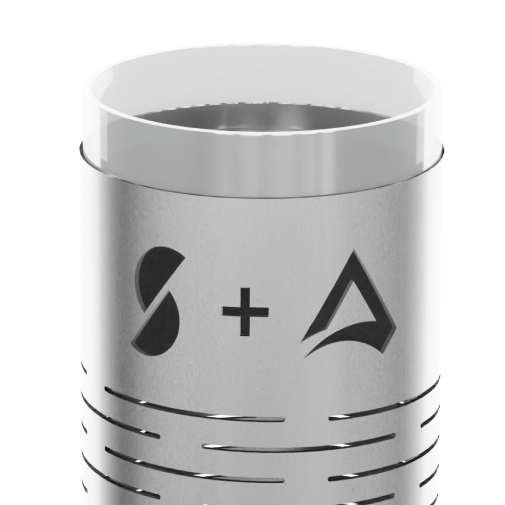
On-axis cutting refers to the laser beam being directed perpendicular to the hypotube's surface, resulting in a clean and precise cut. This technique ensures that the laser energy is focused directly on the desired area, minimizing any potential heat-affected zones or irregularities. On-axis cutting provides consistent and uniform results along the entire length of the hypotube, offering reliable mechanical properties.
Off-axis cutting, on the other hand, involves directing the laser beam at an angle relative to the hypotube's surface. This technique can result in variations in the depth and quality of the cuts along the hypotube, leading to inconsistent mechanical properties. Off-axis cutting may introduce irregularities, compromise the structural integrity, and hinder the performance characteristics of the catheter reinforcement.
Bend Radius: On-axis cutting plays a vital role in achieving the desired bend radius of the catheter. Precise and uniform cuts facilitate controlled flexibility, allowing the catheter to navigate smoothly through tortuous anatomical structures without compromising its structural integrity. On-axis cutting ensures consistent and predictable bend radius, enhancing the catheter's maneuverability and reducing the risk of kinking.
Symmetry Laser is here for you! We are laser cutting experts with years of experience in the medical industry with the insights and know-how to create the perfect laser cut hypotube for your project.
Let's work together
On-axis cutting contributes to the kink resistance of the catheter shaft. A uniform laser cut pattern ensures the consistent distribution of mechanical properties, reinforcing the catheter against the formation of kinks. With on-axis cutting, the hypotube maintains its structural integrity and can withstand bending and torsional forces during catheterization procedures, enhancing overall performance and patient safety.
On-axis cutting supports optimal pushability, which is essential for advancing the catheter through challenging anatomical pathways. The uniformity of the laser cut pattern ensures consistent material removal, resulting in a smooth and even surface. This uniformity minimizes friction and drag, facilitating the easy advancement of the catheter while maintaining excellent pushability characteristics.
On-axis cutting offers better consistency and quality control throughout the manufacturing process. By directing the laser beam perpendicular to the hypotube's surface, the cutting parameters can be precisely controlled, ensuring uniformity in the cut pattern. This consistency enables reliable mechanical properties, such as flexibility, torque response, and pushability, leading to consistent catheter performance and reducing the risk of unexpected variations during use.
On-axis cutting provides greater flexibility for optimizing the mechanical properties of the catheter reinforcement. Engineers can precisely control the depth, width, and spacing of the laser cuts, tailoring the performance characteristics to meet specific clinical requirements. The ability to optimize the cut pattern with on-axis cutting allows for the development of catheters with superior performance and enhanced clinical outcomes.
Innovative Laser Cutting Solutions.
305 Mace Blvd. Suite 100,
Davis, CA 95618
(530) 564-8001
© 2022 Symmetry Laser, All Rights Reserved.


