.png)
Last Updated:
April 28, 2026
A laser cut hypotube horseshoe pattern for a steerable catheter refers to a specific design configuration of a hypotube used in the construction of a steerable catheter. The horseshoe pattern is a cutout or opening in the hypotube that resembles the shape of a horseshoe. This pattern is strategically positioned along the length of the hypotube to enhance flexibility and allow for controlled bending or deflection of the catheter shaft.
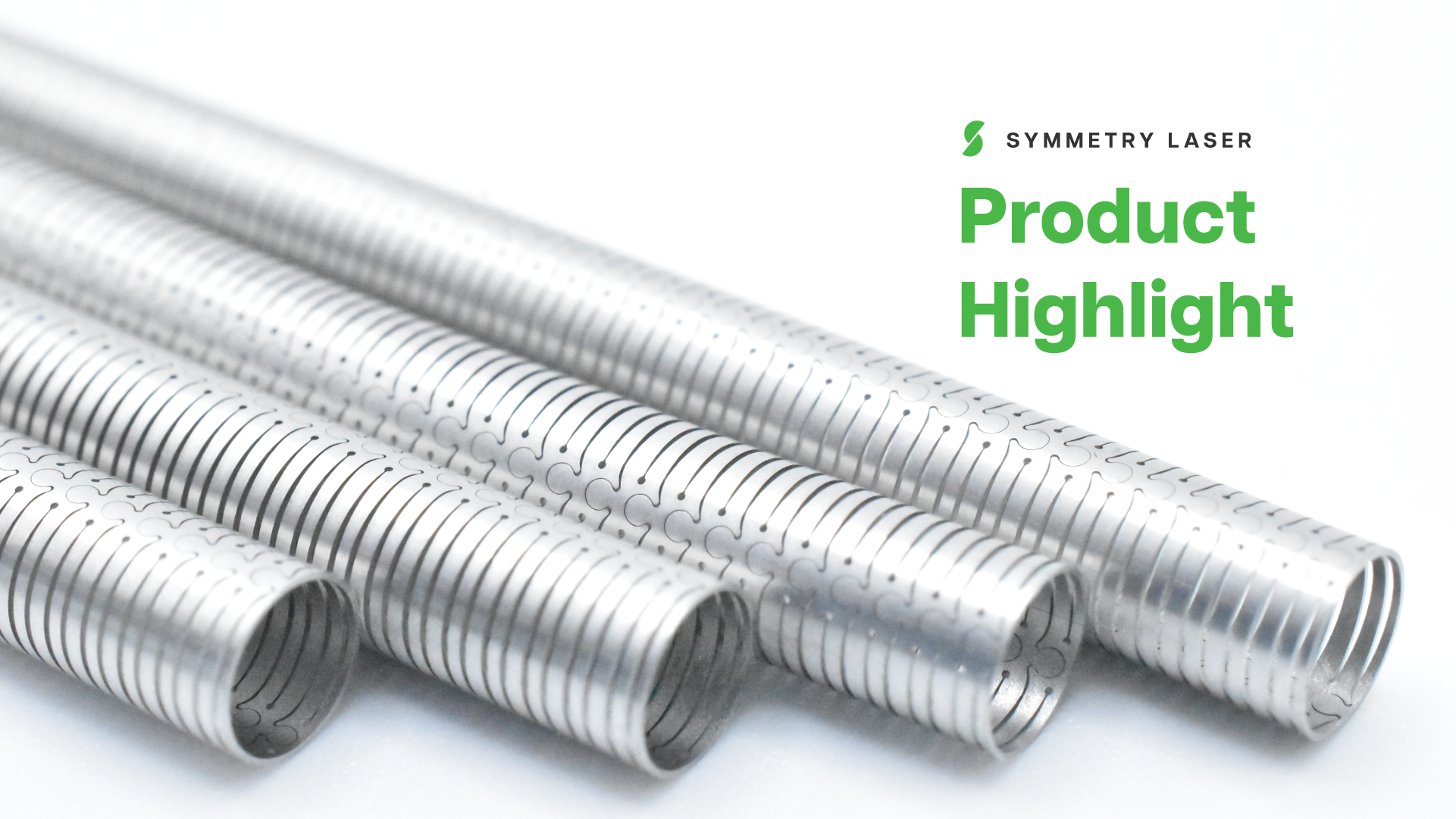
The horseshoe pattern serves a crucial role in steerable catheters by providing localized flexibility in specific regions of the catheter shaft. This flexibility allows for easier navigation through tortuous anatomies and improved maneuverability during medical procedures. By selectively removing material in the shape of a horseshoe, the hypotube can bend or deflect more easily at the desired location, facilitating precise steering and improved control.
The size, dimensions, and placement of the horseshoe pattern can vary depending on the specific design requirements of the steerable catheter. Factors such as the intended application, anatomical target, and desired catheter performance characteristics will influence the design of the horseshoe pattern. Computer-aided design (CAD) software and advanced laser cutting techniques enable precise and consistent creation of the horseshoe pattern, ensuring reliable and reproducible results.
Symmetry Laser is here for you! We are laser cutting experts with years of experience in the medical industry with the insights and know-how to create the perfect laser cut hypotube for your project.
Let's work togetherIt is worth noting that the horseshoe pattern is just one of many possible patterns and configurations that can be employed in the design of steerable catheter shafts. The specific pattern chosen will depend on the desired steering capabilities, flexibility requirements, and overall catheter system design. Each pattern is carefully engineered to optimize performance, enhance maneuverability, and deliver exceptional patient care during minimally invasive procedures.
Innovative Laser Cutting Solutions.
305 Mace Blvd. Suite 100,
Davis, CA 95618
(530) 564-8001
© 2022 Symmetry Laser, All Rights Reserved.


